South Florida Humidity Indoors: What Homeowners Should Do First

If you live in Miami-Dade or Broward, sticky outdoor air is part of the experience. The part that sneaks up on people is how that elevated moisture behaves once it enters your home: a bedroom that feels stuffy, windows that fog in the morning (on the inside), or an air conditioner that runs for hours and still leaves the home feeling and smelling damp.
This guide is a homeowner sequence—observe the conditions, try a few modifications, then decide if an indoor air quality assessment or mold testing is the next step. The steps outlined below work for the majority of homes in South Florida.

Homes in Coastal South Florida trade moisture with the outdoors all day; what matters is whether your house can regulate the humidity.
Why indoor humidity feels different here
Through the long warm season, outdoor air along the coast carries a heavy moisture load, and houses here exchange air with that weather constantly. Doors, windows, attic hatches, outlets, plumbing, and small gaps at duct connections allow humid air to enter. Showers, cooking, and laundry can add additional water vapor from inside.
Your air conditioner serves two primary functions; it is meant to cool the home and remove moisture while it runs. When it only accomplishes the cooling aspect, the thermostat can show a low temperature while the home still feels uncomfortable. A closed closet door, a weak bath exhaust fan, or an air vent that blows cold for a few minutes and stops can allow elevated humidity to persist long after the last rain shower. A dry period can mask the symptoms and a stretch of storms can make it obvious.
One day of feeling muggy in your home could just be the weather. A week of observing the same condition can tell you whether the house is able to recover. When it does not, Clean Air Miami’s high humidity page explains how an HVAC inspection and moisture-mapping visit works and can help diagnose a deeper issue.
What the humidity numbers actually mean
Relative humidity (RH) is the share of moisture the air is holding compared with what it could hold at that temperature. You do not need sophisticated equipment to use the idea: a basic indoor hygrometer is enough to observe a pattern.
The U.S. Environmental Protection Agency advises keeping indoor humidity low, below 60 percent and ideally between 30 and 50 percent, and notes that RH can be measured with an inexpensive hygrometer. The Florida Department of Health similarly recommends keeping indoor humidity below 60 percent and adds that below 50 percent is best for controlling both mold growth and dust mites. They also stress the importance of venting shower and cooking moisture to the outdoors.
Those ranges are prevention targets, not a diagnosis. If relative humidity readings remain elevated or if you need a separate dehumidifier to remain under 60 percent while the central system is already running, the Florida Department of Health guidance is to have the air-conditioning system examined.
What to do first
These three recommendations can help you better understand your home’s relative humidity situation. They also give you something concrete to describe if you end up reaching out for guidance.
Keep at least one hygrometer in a room you use
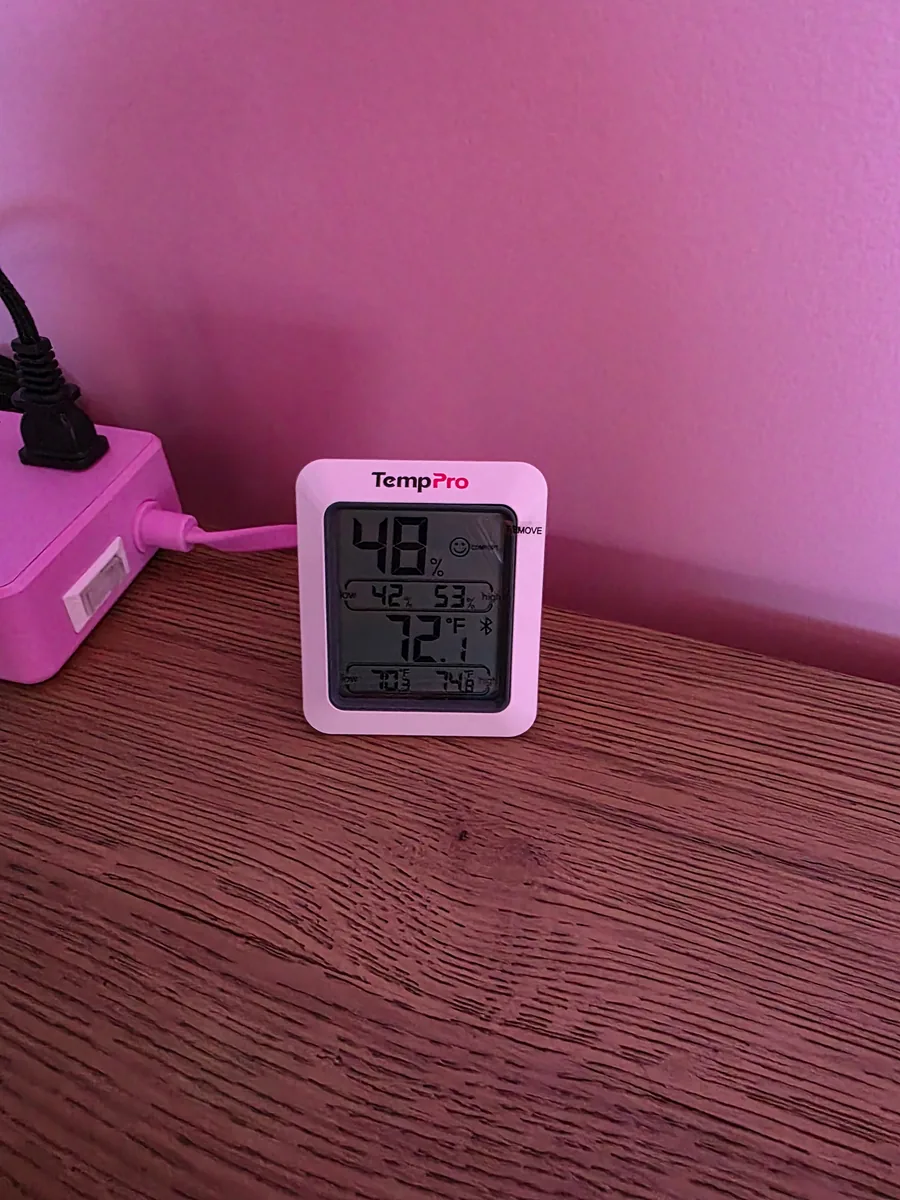
Set up at least one hygrometer in a bedroom or the main living area. Observe it morning and evening for at least a week and document the readings along with any relevant details such as if it rains and/or how it feels. Readings might increase after showers and cooking, then ease once the HVAC system has had time to run. If the humidity remains elevated overnight regardless of temperature, the house is most likely holding moisture.
Exhaust the moisture you make
Cooking, showering, and drying clothes can introduce water into the air and that wet air can disseminate throughout the home into bedrooms and closets. Run the bathroom exhaust fan while showering and for at least 30 minutes afterward; there are bathroom fans and switches with timers and humidity sensors that can help. Use a squeegee to remove excess moisture from the walls and glass. Make sure that the tubs and shower pans can drain entirely after use. Use the kitchen exhaust fan when cooking or boiling water. Make sure the clothes dryer duct actually vents to the outside and that the duct isn’t clogged.
Give the air conditioner time to dry the air
In the majority of South Florida homes, the air conditioning system is also the primary dehumidifier. Turning the thermostat down feels like the natural response to muggy feeling air. If the system blasts cold air and shuts off after a few minutes, it can cool the room and stop before it has removed significant moisture from the environment. That situation is called short cycling and if it is happening it is worth contacting your HVAC professional to ask them for solutions. Setting the thermostat even lower usually repeats the same pattern. This happens most commonly in homes where the HVAC system is too powerful for the space, when the thermostat is not properly installed, or when there is a lack of balance between the supply vents and the return.
Always set the air handler fan to auto unless an HVAC technician who has evaluated your system recommends otherwise. Continuous fan operation can move air across a wet coil after cooling stops and reintroduce moisture back into the home. Replace air filters regularly (between 30 – 90 days for 1 inch filters) and keep supply and return vents unblocked. If rooms stay clammy, it is possible that the system is short cycling, there is duct leakage, or humid air is infiltrating. It is possible that an air balancing and/or a dedicated dehumidifier can help the home. A portable dehumidifier can reduce humidity while you sort out the cause.
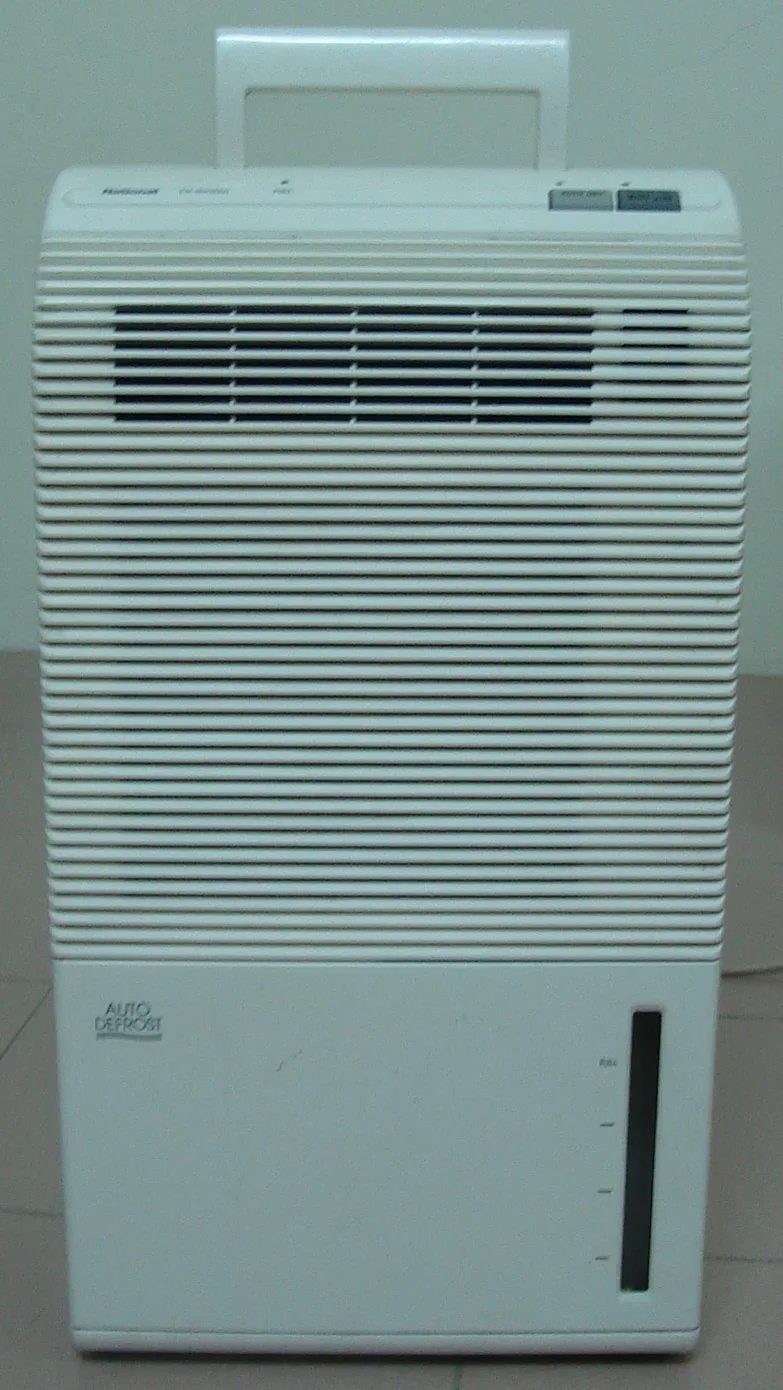
A dehumidifier can help when the air conditioner cools the house but does not keep indoor humidity within the recommended range—have the HVAC system inspected if you cannot stay below 60%.
When wet materials change the timeline
Everyday humidity is one issue. Roof leaks, plumbing failures, failed appliances, and soaked building materials are another. EPA guidance stresses drying water-damaged areas and items within 24 to 48 hours to help prevent mold growth. Florida Department of Health guidance also says to clean and dry spills within 24 hours and to dry wet building materials and carpets within 24 hours.
If materials stay wet past that window or if you can see staining, soft drywall, or suspected microbial growth you have moved beyond the “try to dry it” phase. Address the water source first then decide whether you need guidance in the form of a mold assessment before proceeding.
When to call for testing
Call for an assessment when the source of the moisture is not obvious, when the house will not dry, or when you need documentation of the event. Call for a mold test when you see visibly damaged building materials and/or suspected microbial growth. We also recommend contacting us if you experience any of the following:
- A musty odor that lingers especially after a water event (leak).
- Stains, soft drywall, or suspected microbial growth that you can see. Take a photo to help remember the spot and track changes
- You are involved in a real estate transaction, an insurance claim, or a dispute where you would benefit from a professional third-party opinion.
- Air that smells musty at the vents, rooms that remain damp, closets that have items that appear to be growing mold.
A professional mold assessment and air quality analysis performed by Clean Air Miami will help you understand extent and what next steps to take.
Mold Testing, A Mold Assessment and Mold Remediation are different jobs
A mold assessment provides a hypothesis of the cause, recommended solutions, and metrics to measure success against. Mold testing is when samples are collected, usually during a mold assessment, and are analyzed by an accredited lab. Mold remediation is the contained, complete removal of mold to the standards outlined in the mold assessment. In most situations a mold remediation is only considered successful and completed once it has passed a post remediation verification.
Construction repairs should only be made once the mold remediation clearance has been achieved.
In Florida, mold assessors and mold remediators are separately licensed; the Florida Department of Health mold page points readers to the Department of Business and Professional Regulation for licensure questions. Clean Air Miami primarily performs mold assessing, mold testing, and mold remediation project management supervision. We generally do not perform mold remediation to avoid conflicts of interest as per the intention of the Florida Statutes. Current assessment and testing services prices are listed on the mold testing page.
A short next step
Setting up a hygrometer, confirming that the bathroom and kitchen exhaust fans are working and being utilized properly, ensuring that the dryer exhaust vent is functioning as intended, and observing the function of the air conditioning helps diagnose a lot of standard South Florida indoor humidity situations. When that doesn’t seem to be enough, when you suspect a water event took place, when you observe wet building materials, if you experience odors, or if a real estate transaction raises the stakes, call us for additional guidance.
You can call us at 305-814-8175 or use the contact page. A 15-minute phone call is usually all it takes to determine if your next step should be to have an indoor air quality assessment performed at your home.