The Complete HVAC Upgrade for Miami Homes & Condos

If you live in a home or condo in Miami, you have likely put care into every part of the space — the furnishings, the finishes, the neighborhood you chose, and the outdoor areas that make it worth coming home to. But there is one part of your home that is almost certainly still performing at a lower standard: your HVAC system.
In South Florida's climate, your air conditioning handles more than the temperature. It governs your indoor air quality, humidity levels, comfort, and even the longevity of your furniture, artwork, and finishes. Think of it as your home's respiratory system. When it is functioning optimally everything can feel right. When it is underperforming, the effects reach every room, every surface, and every breath you take inside.
For most homes and condos in Miami, the standard builder-installed HVAC system was designed to pass inspection, not to deliver the air quality and comfort the space deserves.
Here is what a fully upgraded, high-performance HVAC system looks like and why it matters for homeowners across South Florida.
We serve Miami-Dade, Broward, and Palm Beach County, including Miami Beach, Surfside, Bal Harbour, Sunny Isles Beach, Downtown Miami, Brickell, Edgewater, Coral Gables, Coconut Grove, Pinecrest, Palmetto Bay, Cutler Bay, Hallandale Beach, Fort Lauderdale, Pompano Beach, Boca Raton, and West Palm Beach.
Your HVAC System Is Your Home's Lungs — It Deserves Better Than Builder-Basic
Why Standard Filters Are Working Against You
When reviewing residential air handlers across Miami, the same issues come up repeatedly: a thin 1-inch filter bowed inward like a concave sail, a filter with a low MERV rating that offers little real protection, or an incorrectly sized filter leaving gaps that allow unfiltered air directly into the system.
All three point to the same problem: ineffective filtration. But the bowed, high-MERV filter is the most telling warning sign of the three.
It means the system is pulling so hard against a restrictive filter that it is creating negative static pressure inside the air handler. In plain terms: the motor is working harder than it was designed to in order to move the volume of air the system requires.
The consequences compound over time:
- The motor wears out faster
- Airflow throughout the home is reduced
- Humidity control is impaired
- Overall comfort and efficiency degrade
This is one of the most common and most overlooked issues in Miami homes and it starts with the filter.
The Upgrade: Thicker Filters That Let Your Home Breathe
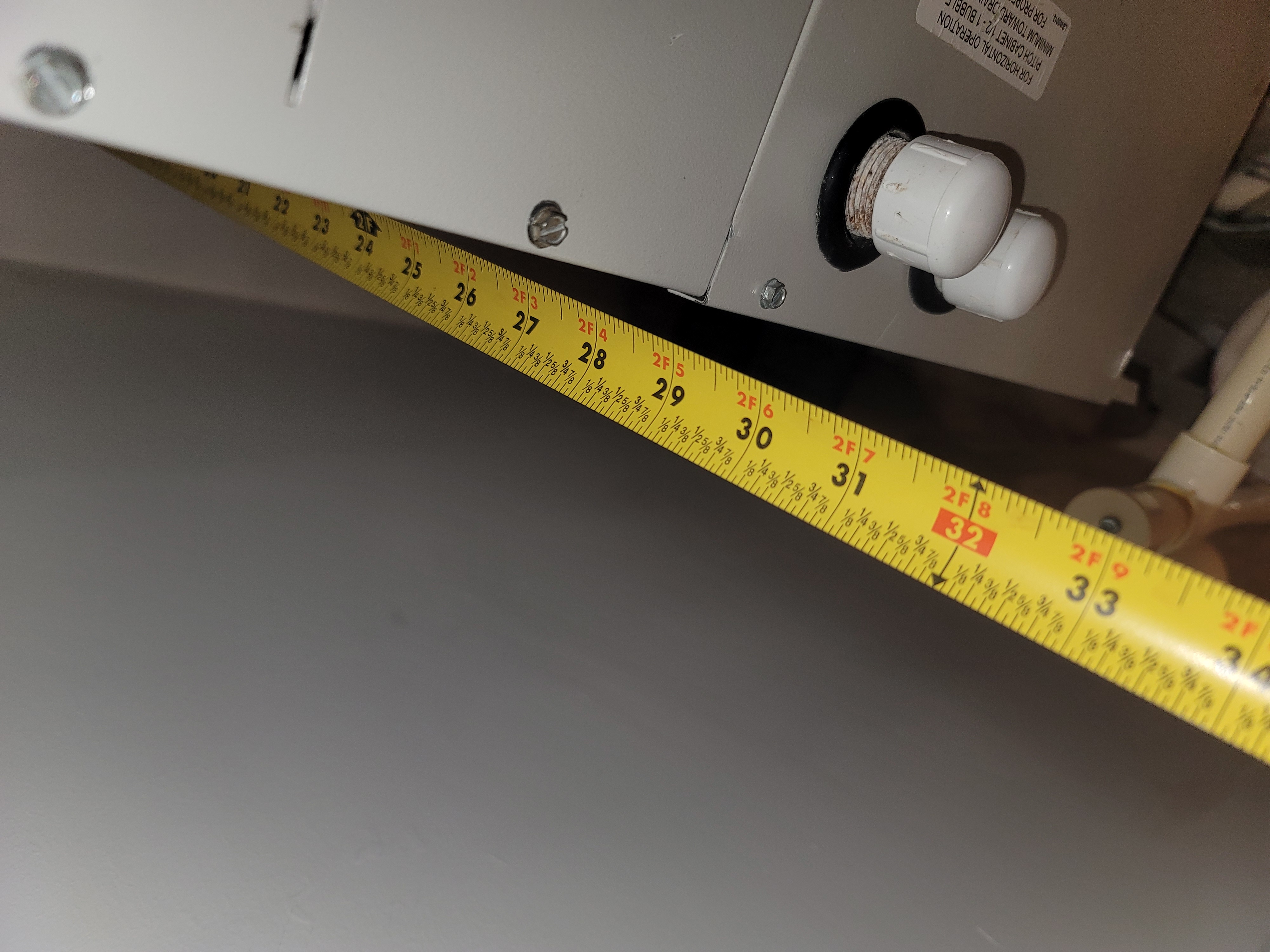
The foundational upgrade is straightforward: replace the standard 1-inch filter with a correctly sized, higher-MERV, thicker filter — typically 2 or 4 inches depending on your system.
Here is why the size difference matters so much:
- More surface area, less resistance. The filtration media can be equally fine with the same material and the same MERV rating, but by increasing the filter thickness from 1 inch to 2 or 4 inches, you dramatically increase the total surface area through which air passes. More surface area means the air moves through with far less resistance, reducing strain on the motor.
- Superior filtration without choking the system. With a thicker filter, you can upgrade to a higher MERV rating which are better at capturing dust, allergens, mold spores, and construction debris, but also pet dander, smoke, candle soot, PM2.5 air pollution, auto exhaust particles, coughing and sneezing droplets, viruses, and bacteria. Some filter systems are even capable of reducing gases like formaldehyde. In a thinner filter, achieving this level of filtration would create negative static pressure and choke the system.
- Longer service life, fewer replacements. Recommended replacement for a standard 1-inch filter is every 30 to 90 days. A thicker filter usually lasts three to six months depending on the environment and usage.
Sometimes the only change required is a larger bracket or housing modification to accommodate the thicker filter. It is a low-complexity mechanical change that delivers a meaningful performance improvement and the right starting point before any additional upgrades are added.
The Full High-Performance HVAC Package
The filter upgrade is the foundation, but the real transformation comes from treating your HVAC system the way it deserves to be treated: as a complete ecosystem, the lungs of your home, rather than a single box blowing cold air and reducing humidity.
The following reflects what we have found, after years of assessing homes across South Florida, to be the HVAC upgrades that make the most meaningful difference.
1. Whole-Home Dehumidifier Integration
In South Florida, high humidity is the defining comfort challenge and no neighborhood feels this more than those on or near the water.
If you are in a waterfront home or high-rise in Miami Beach, Sunny Isles Beach, Surfside, Bal Harbour, Brickell, or Edgewater, you likely want the option to enjoy an open balcony door or a cross breeze without your home turning into a sticky, musty, moisture-laden space.
An integrated whole-home dehumidifier allows you to:
- Maintain comfortable indoor humidity levels even when outside air is entering
- Rely less on your AC system to keep the space comfortable
- Significantly reduce mold risk, musty odors, and moisture damage
- Protect closets, cabinetry, artwork, and furnishings from the long-term effects of humidity exposure
This is the upgrade that delivers on the Miami lifestyle promise: enjoy your view, balcony doors open, even on a day with 85 percent outdoor humidity.
2. LED Ionization Air Purification System
An LED air purification system can be installed in the ducting, typically in the plenum, the main air distribution section of your HVAC system, where it functions as an advanced air purification layer for your entire home.
What it does:
- Ionizes airborne particles, making them heavier so they are more easily captured by filters or fall out of the breathing zone
- Reduces the presence of airborne germs, viruses, and bacteria in the air stream
- Produces a neutralizing agent whose byproduct is hydrogen peroxide at trace concentrations consistent with what is found naturally in clean outdoor air
Important note for sensitive individuals: For anyone who is immune-compromised or sensitive to hydrogen peroxide, this system can be installed with a manual switch, allowing you to turn the ionizer on or off.
3. UV Lights for Coils and Blower
While the ionizer treats air as it moves through your system and home, UV lights address what can live and grow on the surfaces inside your air handler.
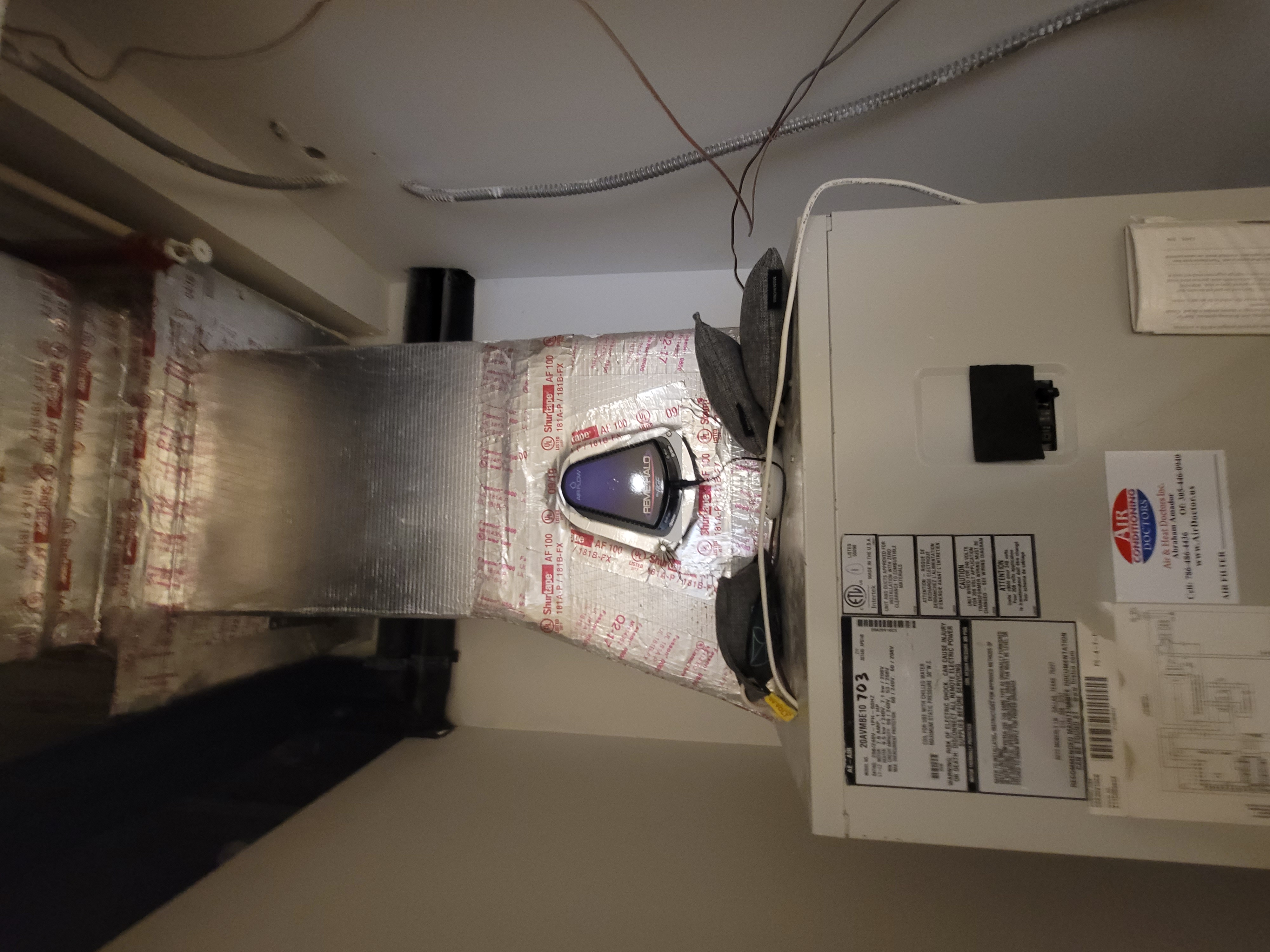
Strategically placed at the evaporator coils and in the blower area, UV lights:
- Discourage mold and bacterial growth on the cold, wet interior surfaces where HVAC mold typically develops
- Reduce organic buildup on coils and blower components over time, helping extend the life of your system
- Help maintain better airflow and efficiency between service visits
In coastal environments like South Florida where salt air, humidity, and warmth create ideal conditions for microbial growth, this is a particularly valuable layer of protection.
Deep Clean and Seal: Treating the Entire Air Pathway
Upgrading the equipment matters. But if the ducts delivering air throughout your home are dirty or leaking, the system cannot perform to its potential. A complete upgrade addresses the full air pathway.
4. Negative Pressure Duct Cleaning
The gold standard in duct cleaning, and the method used by major companies like Stanley Steemer, is negative pressure duct cleaning.
How it works:
- A high-capacity suction machine is connected directly to the ductwork, generating significantly more airflow than a typical residential HVAC system produces
- Vents are systematically sealed off to concentrate suction in sections at a time
- Compressed-air tools like air whips and light brushes are used at each vent opening to agitate and dislodge built-up debris
- The negative pressure pulls contaminants out of the system entirely, rather than pushing them further in
The result is a clean baseline free of dust, dander, microbial fragments, and years of accumulated buildup. This matters especially in homes that have undergone renovation or new construction, where harmful construction debris commonly ends up in the ductwork, as well as in older residences and condos where the ducts may not have been cleaned in years.
5. AeroSealing
AeroSeal is what ensures the results of duct cleaning and upgraded filtration are long lasting. It also improves the system's balance and fundamental efficiency.
After duct cleaning, AeroSeal Duct Sealing works from the inside out:
- The duct system is pressurized and then treated with a mist of non-toxic sealant
- Those sealant particles seek out and bond to leaks at joints, seams, and small gaps throughout the ductwork
- The result is a measurably tighter system that delivers more conditioned air where it is actually needed, while keeping unwanted, unconditioned air out
Leaking ducts are one of the primary causes of uneven temperatures from room to room, a common complaint in larger homes, and AeroSealing addresses that problem at the source.
Combining negative pressure duct cleaning with AeroSeal Duct Sealing gives you cleaner ducts, better system balance, and more consistent comfort throughout the home.
What the Upgrade Process Looks Like
The complete HVAC upgrade described can typically be completed over one to two days and follows a logical sequence:
- System Cleaning & Component Preparation: The air handler coils, blower motor, and housing are cleaned thoroughly. Depending on the system and its configuration, this may involve removing the unit or working within it in place.
- Duct Cleaning & Sealing: Negative pressure duct cleaning is performed throughout the ductwork, followed by AeroSealing to seal leaks from the inside. Whether this happens with the unit in place or removed depends on the specific system and access requirements, every home is different.
- Upgrades Installed: The larger filter housing, LED purification system in the plenum, UV lights in the air handler housing, and whole-home dehumidifier integration where applicable are all installed and ready to perform.
The result is a cleaner, more efficient HVAC system and a fundamental transformation in the air quality and comfort of your home.
Who This Upgrade Is Designed For
This approach is specifically suited for:
- Condos and penthouses in Miami Beach, Surfside, Bal Harbour, Sunny Isles Beach, Brickell, Downtown Miami, and Edgewater
- Single-family homes in Coral Gables, Coconut Grove, Pinecrest, Palmetto Bay, Fort Lauderdale, Boca Raton, and Palm Beach
- Owners who have invested in their space and want the indoor environment to reflect that same standard
- Builders and general contractors interested in delivering the best possible air quality to their customers
Book a Free Phone Consultation
If your home or condo is anywhere across Miami-Dade, Broward, or Palm Beach County and you are done settling for builder-basic air quality:
- Breathe cleaner, healthier air throughout your home
- Eliminate humidity, mold concerns, and musty smells at the source
- Extend the life of your HVAC system
- Actually enjoy fresh air moving through your home with doors and windows open
The next step is a free phone consultation with our team. We will review your current setup, discuss your air quality goals and walk you through exactly what an upgraded system would look like for your specific home.
Call us at 305-814-8175 or schedule your free phone consultation here.
Frequently Asked Questions
What is the difference between a standard 1-inch AC filter and thicker one?
Standard 1-inch filters have limited surface area, which causes the air handler to work harder to move air through the system, something you can often see for yourself when the filter is visibly curving inward. Upgrading to a thicker filter, typically 2 or 4 inches depending on your system, increases that surface area dramatically. This reduces strain on the blower motor, allows for higher MERV filtration ratings with minimal airflow restriction, and extends the time between filter changes. Sometimes a simple bracket or housing modification is all that is required to make the switch.
What MERV rating should I use for my Miami home?
For most Miami homes and condos, a MERV 7 to 9 rating in a standard 1-inch filter will trap mold spores and most common contaminants. The problem is that pushing beyond that range in a 1-inch filter can suffocate the system. With a thicker filter, you gain the ability to safely increase the MERV rating to 11 or higher with minimal airflow restriction and that is where the real difference in air quality begins.
At MERV 11 and above, filtration extends to pet dander, auto exhaust particles, smog, smoke, candle soot, PM2.5 air pollution, coughing and sneezing droplets, viruses, bacteria, and other ultrafine particles which is the category of contaminants that ultra-sensitive individuals, allergy sufferers, and anyone with respiratory concerns are most affected by. This is also why the thicker filter housing is not optional at higher MERV ratings: the increased filtration density requires the additional surface area to avoid restricting airflow. Your specific system and return location will determine the optimal choice, and we assess this during the consultation.
How does a whole-home dehumidifier differ from a portable unit?
A portable dehumidifier manages moisture in a single room and usually requires manual emptying. A whole-home dehumidifier integrates directly with your HVAC system, adding dry air to the conditioned air as it is distributed throughout the home. It operates automatically, delivering consistent humidity control in all spaces including after periods of time when doors and windows are open. For oceanfront properties in Miami Beach, Sunny Isles Beach, Surfside, and Bal Harbour, this is a foundational upgrade.
What is the LED ionizer and is it safe?
The LED ionizer is an in-duct air purification system typically installed in the plenum of your air handler. It ionizes airborne particles and produces a neutralizing agent (hydrogen peroxide) at trace concentrations similar to those found naturally in clean outdoor air. It is safe for the vast majority of people. However, anyone with chemical sensitivities, respiratory conditions, or a compromised immune system should consult their physician before use. For those households, a power switch can be installed to control the ionizer's output independently of the HVAC system.
What is negative pressure duct cleaning, and how is it different from a standard duct cleaning?
Standard duct cleaning often involves a rotating brush with a vacuum attachment. Because the suction is not sufficient, the process can redistribute debris rather than remove it. In some cases the brushes are rigid enough to abrade the duct lining and damage junction points potentially creating new leak points and releasing harmful fiberglass particles in the process. Negative pressure duct cleaning takes a different approach entirely: a high-capacity suction machine is connected directly to the ductwork, and compressed-air tools at each vent dislodge built-up dust and debris while the machine pulls everything out of the system completely. The result is a thorough, safe removal of contaminants, which is why we recommend it as the standard for every project.
What is AeroSeal, and how is it different from regular duct sealing?
Traditional duct sealing is either completed from the outside where a technician manually applies mastic or tape to visible gaps, cracks, joints, and seams or from the inside by coating the entire inside of the ductwork, which reduces the total capacity of the ducting.
In some cases, leaks are located inside walls and ceilings that are largely inaccessible. Reaching them through traditional methods would mean removing drywall or sheetrock just to assess and repair the problem. AeroSeal eliminates that entirely. The duct system is pressurized and measured, then treated with an aerosol-based non-toxic sealant that travels through the ductwork and bonds specifically to leaking areas regardless of where they are located without requiring any physical access. The system then measures again, and the results speak for themselves: before and after pressure readings confirm exactly how much leakage existed and how much has been eliminated.
How long does a full HVAC upgrade take?
Most complete upgrades are finished within one to two work days once upgraded components have been received. The sequence covers system cleaning, duct cleaning, AeroSealing, and installation of all upgraded components. Whether the air handler needs to come out or can be serviced in place depends on the condition of the system, its configuration, and access requirements — the same applies to duct cleaning and AeroSealing. The timeline also varies based on system size, duct complexity, and building access — a Brickell high-rise has different logistical considerations than a single-family home in Coral Gables or Pinecrest.
Is this type of upgrade appropriate for a high-rise condo?
Yes. Many of the homes that benefit most from this approach are high-rise condos in Miami Beach, Surfside, Bal Harbour, Sunny Isles Beach, Brickell, and Edgewater, where building management controls common area air quality and individual unit HVAC systems carry the full burden of air quality within the unit itself. In a sealed high-rise environment, what your system does with the air it circulates matters more, not less. The upgrades are designed to work within the constraints of condo living, including building access requirements and unit-specific duct configurations and equipment sizing.